
When trading spot gold and spot silver, many investors are concerned not only with short-term market movements but also with the transparency of the trading process itself. Where do the prices displayed on the screen come from? What happens to an order after it is submitted? Is slippage a result of natural market fluctuations or platform intervention? The answers to these questions lie in a platform’s pricing sources and order execution mechanisms.
Unlike exchange-traded products such as A-shares in China, spot gold and spot silver are traded in the global over-the-counter (OTC) market, which has no single centralised exchange. Buy and sell quotes are supplied by liquidity providers (LPs) across the market. These providers continuously update their bid and ask prices in response to international market movements and available order-book depth. Trading platforms obtain quotes from these sources, aggregate and filter them, and then display the resulting prices to clients. In other words, the transparency of pricing sources and the clarity of the order execution process are key factors in determining how transparent a trade is.
Many investors have encountered a similar situation. For example, a spot gold quote may be displayed at USD 4,202.50 per ounce. However, just as a market buy order is submitted, a major event such as the release of US nonfarm payroll data or a central bank decision may cause the market price to move rapidly to USD 4,203.00 per ounce. The order may then be executed at the latest available price. This difference, known as slippage, is a normal feature of the global OTC market. It results from continuous real-time price fluctuations and does not, in itself, indicate platform intervention or a system malfunction.
During major economic data releases or periods of escalating geopolitical tensions, gold and silver prices can move sharply within seconds. If a platform relies on a single liquidity provider, its available quotes and execution capacity may be constrained by that provider’s real-time liquidity conditions. During periods of heightened volatility, this may increase the likelihood of price gaps, execution delays or orders that cannot be filled. Investors may also find it more difficult to determine whether a price discrepancy stems from market movements or limitations associated with a single pricing source.
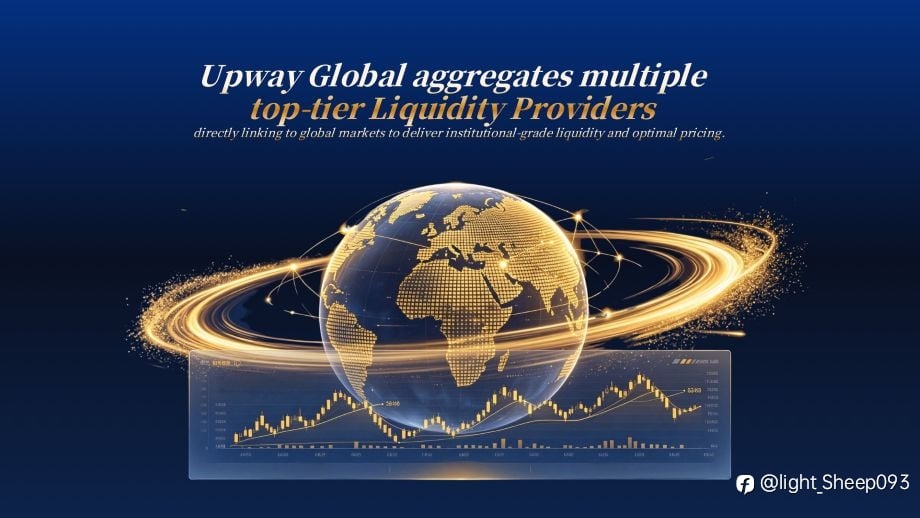
Transparent Pricing: Aggregating Multiple Top-Tier Liquidity Providers to Reflect Global Market Prices
Upway Global connects with multiple top-tier liquidity providers and aggregates bid and ask quotes from multiple sources in real time. Its system automatically filters the available quotes to present competitive pricing to clients.
Compared with relying on a single pricing source, multi-provider aggregation reduces dependence on any one institution and helps ensure that displayed quotes more closely reflect prevailing global market conditions. Combined with access to a broader pool of liquidity, this approach can support greater pricing continuity and order execution availability during volatile market periods. The market prices displayed to investors are therefore informed by quotes supplied through multiple liquidity channels.
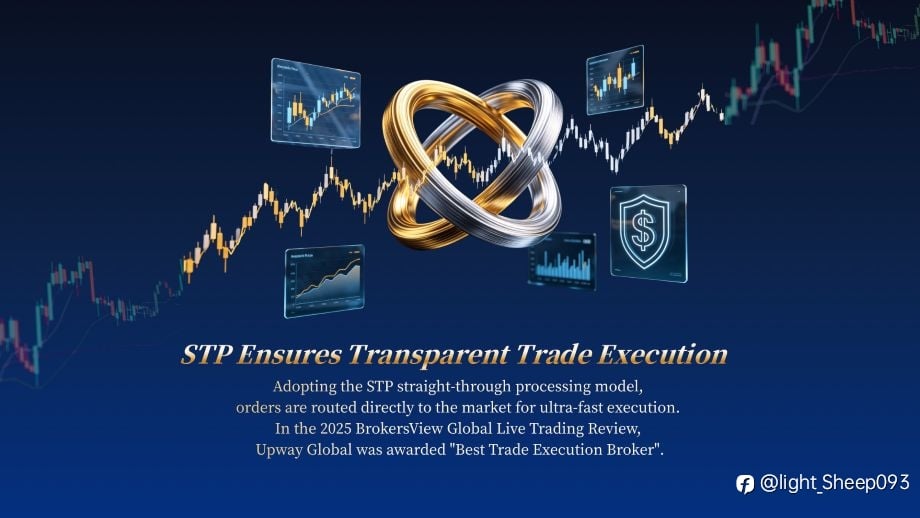
Transparent Execution: STP Processing for Automated Order Routing Without Manual Intervention
Transparency extends beyond the source of a quote to the entire process through which an order is routed and executed.
Upway Global adopts the Straight Through Processing (STP) model, under which client orders are processed automatically without manual intervention or an intermediary market-making step by the platform. Orders are routed directly to the international liquidity market for execution. Based on real-time liquidity conditions, the system intelligently routes orders to available execution channels to seek competitive execution outcomes while reducing unnecessary intermediaries.
This automated process helps reduce the potential for human-related delays and manual interference in order handling. It also makes the order-routing and execution process more systematic and traceable.
Together, multiple top-tier liquidity providers and STP execution support the two key components of the trading process: price formation and order execution. By connecting the stages from quote generation and order routing to final execution, these mechanisms make trading transparency more than a claim about a single operational step. Instead, they contribute to transparency throughout the trading process.
It is important to note that access to multiple top-tier liquidity providers and the use of STP do not eliminate market risks or guarantee that every order will be executed immediately at the price displayed to the investor. During periods of extreme volatility or a significant contraction in global liquidity, slippage, partial fills and temporary order execution failures may still occur. These are inherent risks of the global OTC market rather than issues that can be ruled out by a platform’s execution model.
When choosing a precious metals trading platform, transparency should be a key consideration. Upway Global supports pricing transparency by connecting with multiple top-tier liquidity providers and promotes a more transparent order execution process through STP. Together, these mechanisms help provide investors with a clearer view of how OTC precious metals trading works.
Investors should also understand the risks associated with market volatility and participate in trading decisions responsibly, taking their individual risk tolerance into account.
면책 조항: 본 게시글에 표현된 견해는 전적으로 작성자의 견해이며 Followme의 공식 입장을 대변하지 않습니다. Followme는 제공된 정보의 정확성, 완전성 또는 신뢰성에 대해 책임을 지지 않으며, 서면으로 명시적으로 언급되지 않는 한 해당 내용을 기반으로 취해진 어떠한 조치에 대해서도 책임을 지지 않습니다.