



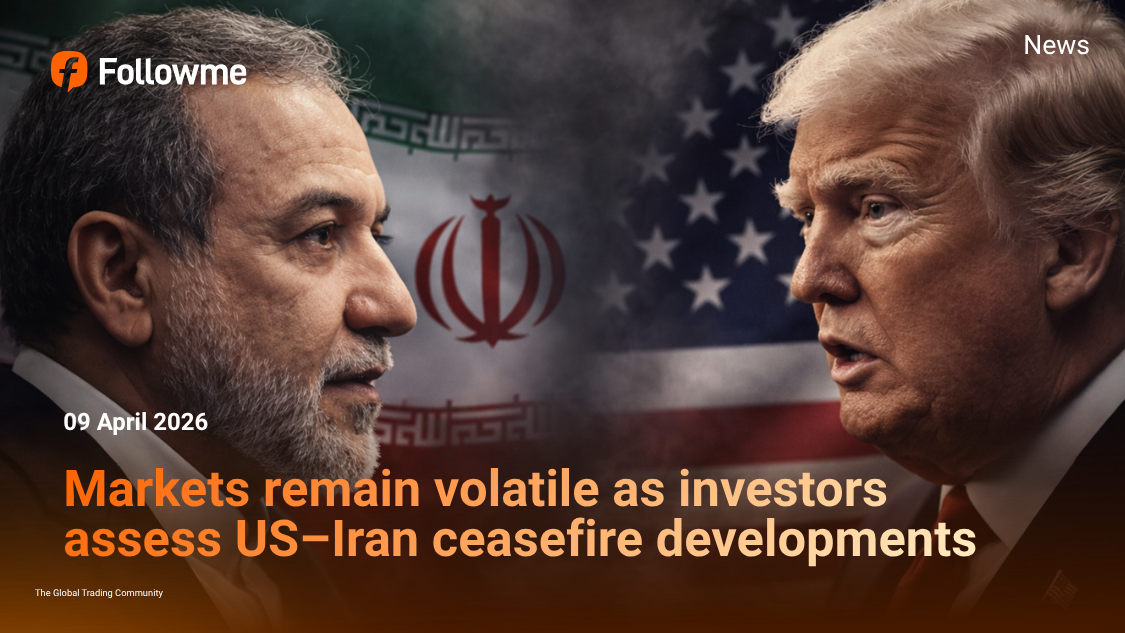
US–Iran geopolitics: The key driver of global markets
Developments between the United States and Iran remained the dominant force driving global markets. Earlier, escalating tensions raised concerns over potential disruptions to energy supply, especially around the Strait of Hormuz, which accounts for roughly 20% of global oil flows.
However, a temporary ceasefire agreement has helped ease immediate concerns. As a result, markets began repricing assets by removing part of the geopolitical “war premium” that had been built in during the escalation phase. Despite this de-escalation, the situation remains fragile, and geopolitical risks have not been fully eliminated, leaving markets sensitive to any new developments.
USD: Rebounds to the 104.8–105.3 range
After weakening during the escalation phase, the U.S. dollar rebounded, with the DXY index trading around 104.8–105.3. Meanwhile, the 10-year U.S. Treasury yield rose back to approximately 4.30%–4.40%, providing support for the dollar.
This rebound reflects a market adjustment, as capital flows returned to USD assets. At the same time, expectations of prolonged higher interest rates from the Federal Reserve continue to underpin the dollar’s strength, reinforcing its central role in the macro landscape.
Gold: Pulls back to 4620–4650 after sharp rally
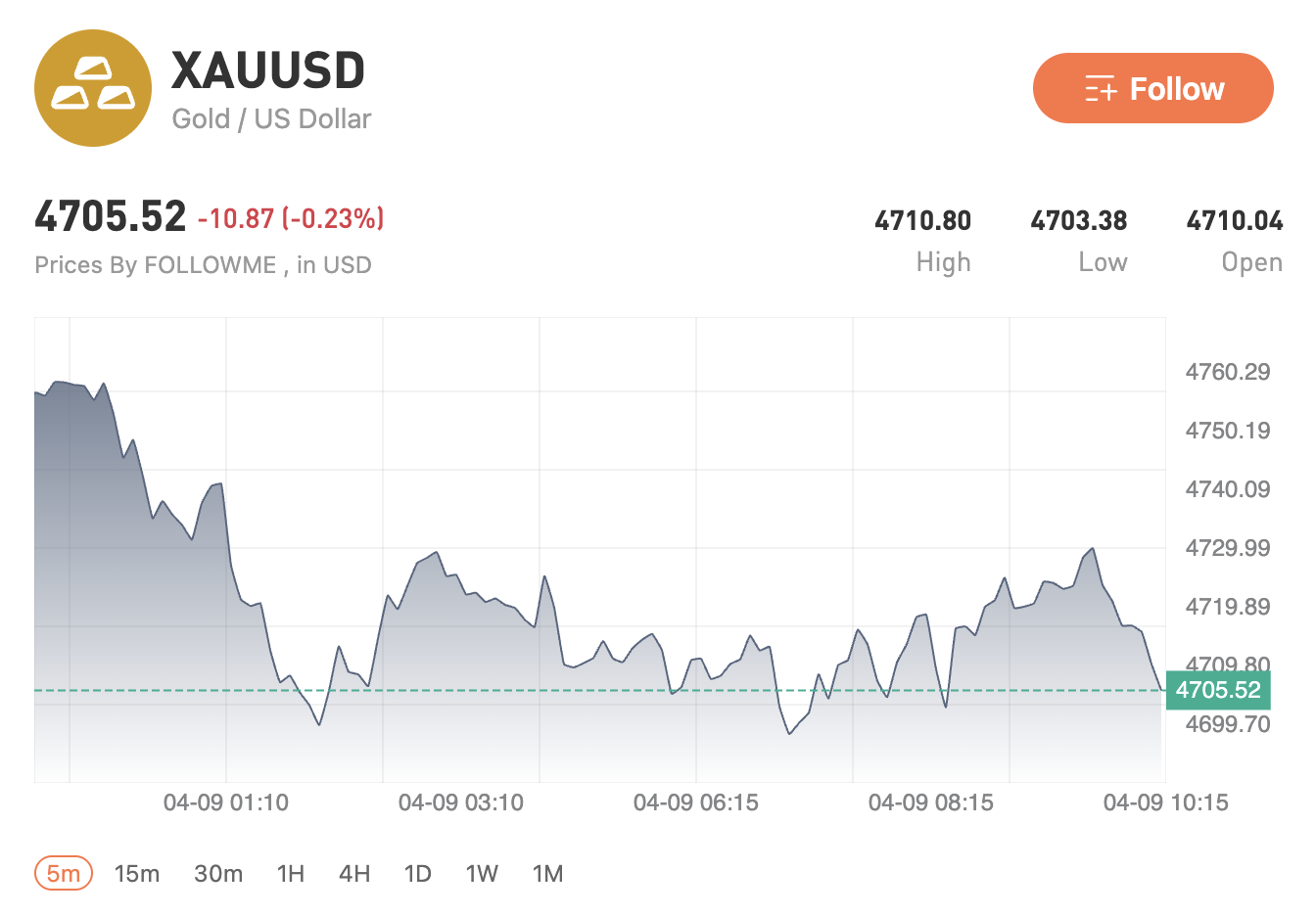
Gold (XAU/USD) rebounded strongly, climbing back above 4700 and reaching around 4706 after briefly pulling back in earlier sessions. This price action highlights:
- Persistent safe-haven demand
- Ongoing geopolitical uncertainty
- Strong intraday momentum
Rather than a clear trend reversal, gold is now trading in a high-volatility range, reflecting conflicting forces between easing tensions and lingering risk.
Oil: Brent retreats to 98 USD/barrel from recent highs
Brent crude declined to around 98$/barrel after previously spiking above 120 USD/barrel during the escalation phase. This pullback reflects improved expectations around supply conditions as geopolitical risks ease. However, prices remain elevated, indicating that the market still retains a partial geopolitical risk premium.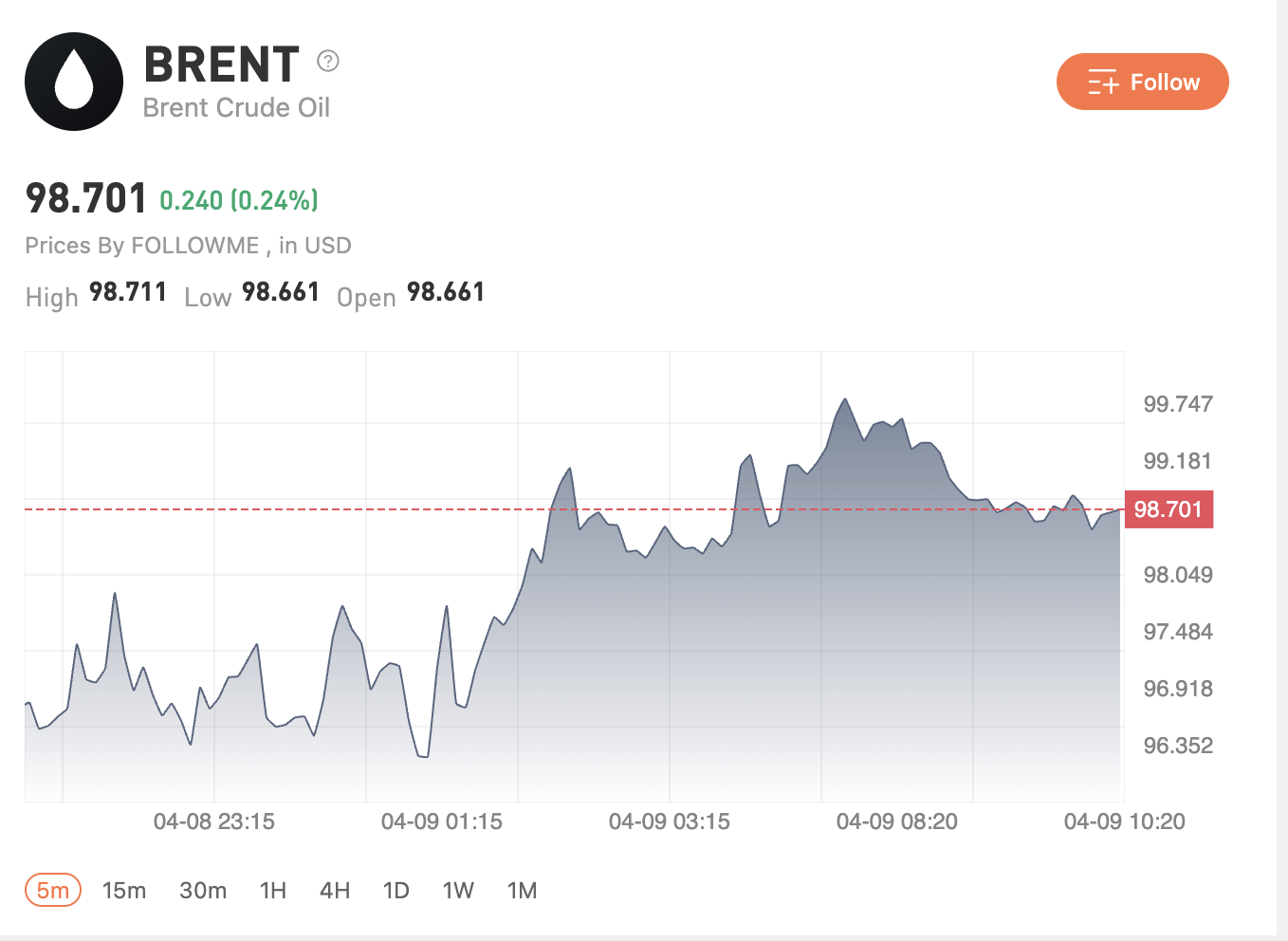
EUR & GBP: Slightly weaker as USD strengthens
European currencies softened slightly as the dollar rebounded. EUR/USD traded around 1.073–1.078, while GBP/USD hovered near 1.252–1.258. Beyond USD strength, weak economic outlooks in Europe and the UK continue to limit upside potential for both currencies.
JPY: Remains under pressure, USD/JPY at 152.5–153.2
The Japanese yen remained under pressure, with USD/JPY rising to 152.5–153.2. The main driver continues to be the wide interest rate differential between Japan and the U.S., as the Bank of Japan maintains a relatively accommodative policy stance.
Market Overview
Overall, the market is entering a post-geopolitical adjustment phase, where assets are gradually removing the pricing of war-related risks. While focus is shifting back toward core macro drivers such as yields and interest rate expectations, geopolitical developments remain a critical factor that can quickly alter market direction.
Want to stay ahead of major macro developments that move the Forex market?
👉Follow Followme and check out the Weekly Economic Calendar




면책 조항: 본 게시글에 표현된 견해는 전적으로 작성자의 견해이며 Followme의 공식 입장을 대변하지 않습니다. Followme는 제공된 정보의 정확성, 완전성 또는 신뢰성에 대해 책임을 지지 않으며, 서면으로 명시적으로 언급되지 않는 한 해당 내용을 기반으로 취해진 어떠한 조치에 대해서도 책임을 지지 않습니다.

- 끝 -