


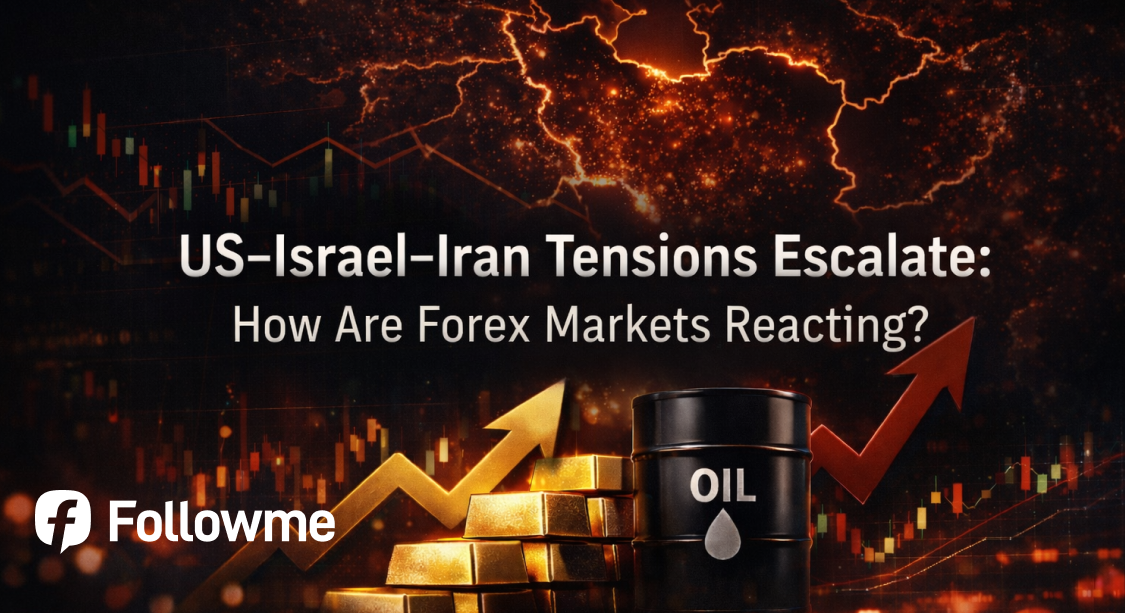
Gold and oil surge while USD returns as a safe-haven asset in a risk-off environment
Global financial markets have entered a period of heightened volatility as military tensions involving the United States, Israel, and Iran escalate, raising concerns about energy supply disruptions and broader economic instability. The geopolitical developments have quickly triggered a risk-off environment, driving capital flows toward defensive assets.
Military strikes and retaliatory actions have disrupted shipping activity across parts of the Middle East, particularly near the Strait of Hormuz, which is a route responsible for transporting nearly 20% of global oil supply.
1. Why Middle East conflicts strongly impact Forex markets
-
Global energy supply expectations
-
Inflation outlook
-
Safe-haven capital flows
-
Reduce exposure to risk assets
-
Increase allocations to gold and USD
-
Push oil prices higher due to supply shock concerns
2. Oil: The market’s first reaction
-
Brent crude surged to multi-month highs.
-
Prices recorded sharp intraday spikes as markets priced in potential disruptions around the Strait of Hormuz.
-
Iran’s role as a major oil producer
-
Shipping risks and temporary suspension of tanker routes
-
Rising insurance and transportation costs
-
Higher inflation expectations
-
Increased volatility in commodity-linked currencies such as CAD and NOK.
3. Gold: The clearest beneficiary
-
Gold prices climbed sharply toward record levels.
-
Investors increasingly viewed gold as an “insurance asset” during uncertainty.
-
Higher USD volatility
-
Weakness in risk-sensitive currencies
-
Increased pressure on equity markets.
4. USD: A complex safe-haven reaction
-
USD demand increases as investors seek safety.
-
The Dollar Index strengthens during periods of heightened uncertainty.
-
Rising oil prices increase inflation risks.
-
Bond yields become more volatile.
-
Monetary policy expectations become harder to predict.
5. Direct impact on major Forex pairs
EURUSD / GBPUSD
-
Highly sensitive to USD movements.
-
Frequent false breakouts due to headline-driven trading.
USDJPY
-
Elevated volatility as JPY also acts as a safe haven.
-
Rapid capital rotation creates whipsaw conditions.
AUDUSD / NZDUSD
-
Strongly linked to global risk sentiment.
-
Typically weaken during defensive market phases.
6. Trader perspective: A headline-driven market
-
Breakouts frequently failing
-
Sudden volatility spikes
-
Increased stop-loss sweeps
-
Focus on trading key price zones rather than chasing momentum
-
Reduce position sizing
-
Monitor oil and gold as sentiment indicators.
Conclusion:
The US–Israel–Iran conflict has become one of the most significant catalysts for global markets:
-
Oil rises on supply disruption fears
-
Gold rallies on safe-haven demand
-
USD becomes highly volatile in a risk-off environment
During geopolitical crises, risk management matters more than predicting direction.
🔔 Follow Followme to stay updated on the market and strengthen your FX knowledge every day
면책 조항: 본 게시글에 표현된 견해는 전적으로 작성자의 견해이며 Followme의 공식 입장을 대변하지 않습니다. Followme는 제공된 정보의 정확성, 완전성 또는 신뢰성에 대해 책임을 지지 않으며, 서면으로 명시적으로 언급되지 않는 한 해당 내용을 기반으로 취해진 어떠한 조치에 대해서도 책임을 지지 않습니다.

- 끝 -