
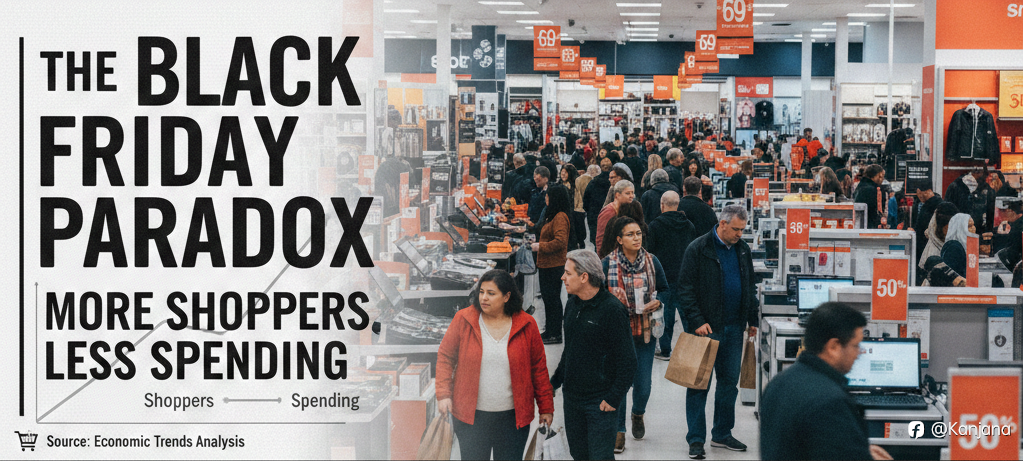
This year’s Black Friday brings a surprising twist: even though more people are out shopping, total spending hasn’t picked up as you might expect. Many stores have seen crowded aisles and long checkout lines — but the cash flowing through registers doesn’t seem to match the foot traffic.
The situation reflects a cautious mood among consumers. Shoppers are browsing sales and hunting for deals, but many are holding back on big purchases or sticking to essentials only. Inflation, higher living costs, and uncertainty about the economy seem to make people think twice before opening their wallets.
At the same time, retailers are offering discounts to attract buyers. While this can encourage some spending, for many shoppers it simply means stretching their budget instead of spending more overall. In effect, the deals may lead to more transactions — but smaller ones.
For businesses, this trend is a signal to adapt: more visitors don’t guarantee strong sales unless shoppers feel confident to spend. For consumers, it reveals a new reality: even big sales days don’t always translate to big spending.
Overall, this Black Friday paradox shows that shopping activity doesn’t always equal strong demand — and it serves as a reminder that economic conditions and consumer confidence remain key drivers behind spending.
면책 조항: 본 게시글에 표현된 견해는 전적으로 작성자의 견해이며 Followme의 공식 입장을 대변하지 않습니다. Followme는 제공된 정보의 정확성, 완전성 또는 신뢰성에 대해 책임을 지지 않으며, 서면으로 명시적으로 언급되지 않는 한 해당 내용을 기반으로 취해진 어떠한 조치에 대해서도 책임을 지지 않습니다.