


Imagine this scenario: you're on a Formula 1 track, surrounded by top-tier race cars, but you're driving a standard family sedan. No matter how skilled a driver you are, you simply cannot win.
In the world of high-frequency and algorithmic trading, many people are doing something very similar.
They design intricate trading logic and backtest it countless times, but when it comes to live execution, they rely on market data that updates only once per second via HTTP polling. This is like driving while looking only in the rearview mirror; you always see the market that has happened, not the market that is happening.
When an arbitrage opportunity appears, it might only exist for a few hundred milliseconds. By the time your "half-a-beat-slow" data refreshes, the opportunity has already been snatched up by traders who have a "forward-facing camera."
This is the power of "latency." To the average person, 100 milliseconds (0.1 seconds) is just the blink of an eye. But in the world of algorithms, it's enough time to perform thousands of calculations and decisions.
So, what does the market look like to a professional trader?
They don't see a series of K-lines. They see a never-ending river composed of tick-by-tick data. Every buy order, every sell order, forms a part of this river. They can see the most minute changes in the order book and feel the pulse of market sentiment.
To achieve this, two key technologies are required:
- WebSocket Protocol: Unlike the traditional HTTP "request-response" model, WebSocket establishes a persistent connection. As soon as there's new market data, the server immediately "pushes" it to you with almost no delay.
- Tick Data: This is the market in its most raw, authentic form. It records every single transaction that occurs, including price, volume, and time. Strategies based on tick data are far more precise than those based on K-lines.
In the past, this "God-level view" was the exclusive domain of large hedge funds and investment banks, who would spend millions on dedicated fiber-optic lines just to be a few milliseconds faster than everyone else.
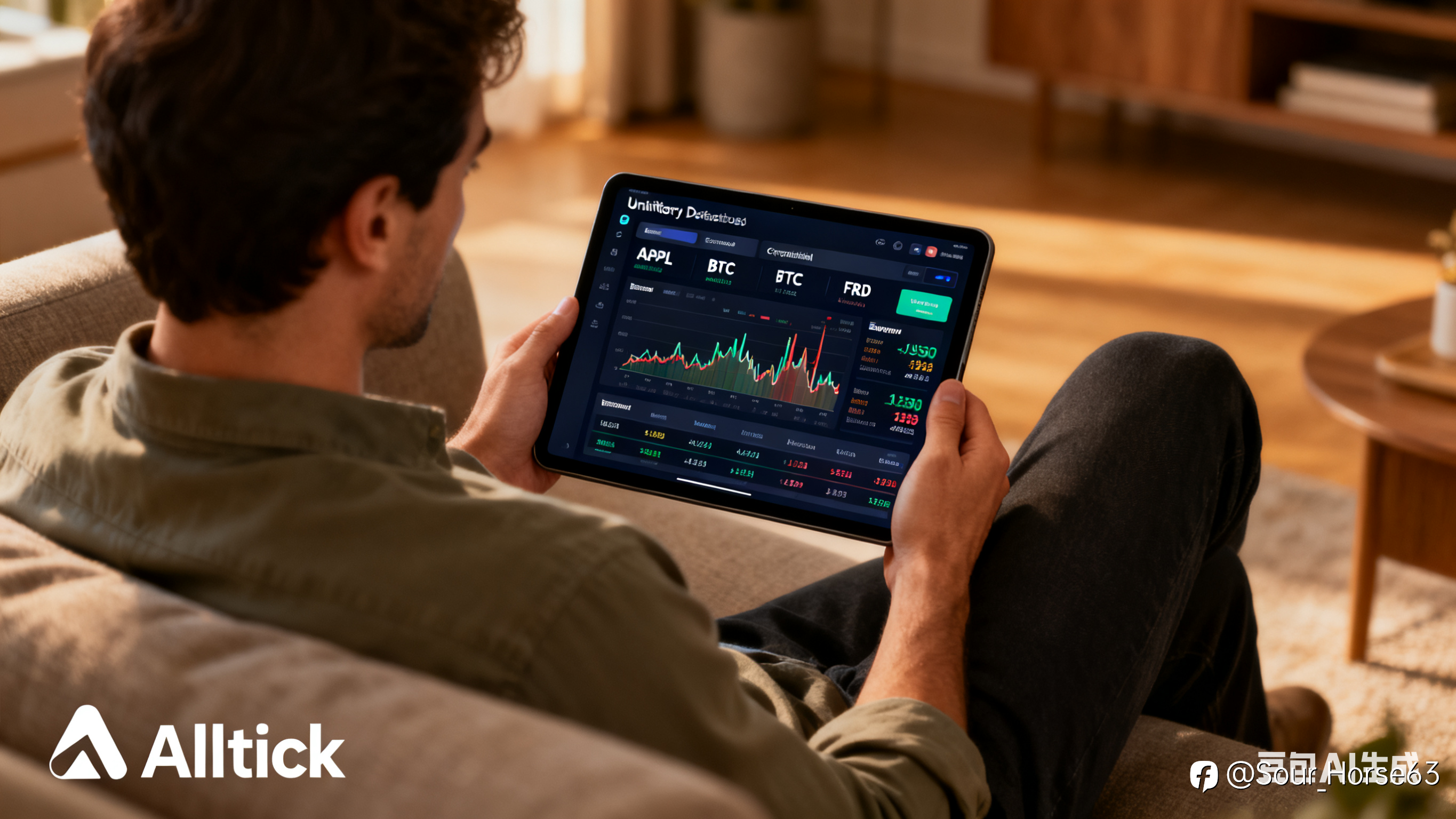
But today, technological advancements are breaking this monopoly. Individual developers and traders can now access this kind of low-latency, real-time data stream through professional API services. For instance, some providers like Alltick have specifically optimized their WebSocket push services to control latency at the millisecond level and offer tick data covering multiple asset classes globally.
So, if your strategy consistently underperforms in live trading, don't rush to discard your logic entirely. First, check your "race car"—your data source. Are you driving a family sedan, or a true F1 car? On a battlefield where speed is everything, a difference in equipment cannot be compensated for by tactics.
#HighFrequencyTrading #AlgoTrading #QuantTrading #WebSocket #Latency #TickData
면책 조항: 본 게시글에 표현된 견해는 전적으로 작성자의 견해이며 Followme의 공식 입장을 대변하지 않습니다. Followme는 제공된 정보의 정확성, 완전성 또는 신뢰성에 대해 책임을 지지 않으며, 서면으로 명시적으로 언급되지 않는 한 해당 내용을 기반으로 취해진 어떠한 조치에 대해서도 책임을 지지 않습니다.

- 끝 -