


In an increasingly competitive market environment, companies must accurately assess their profitability to achieve sustainable growth. The "gross profit margin" is one of the most straightforward and critical financial indicators for this purpose. By gaining an in-depth understanding of gross profit margin, businesses can precisely evaluate the effectiveness of cost control, the strength of their pricing strategies, and adjust their operational direction accordingly to ensure long-term stability.
This article will analyze the calculation and meaning of gross profit margin, explore the key factors that affect it, offer practical strategies for improvement, and present benchmarks and case studies from various industries to provide comprehensive reference tools for readers.

What is Gross Profit Margin and How Is It Calculated?
1. Definition and Calculation Formula
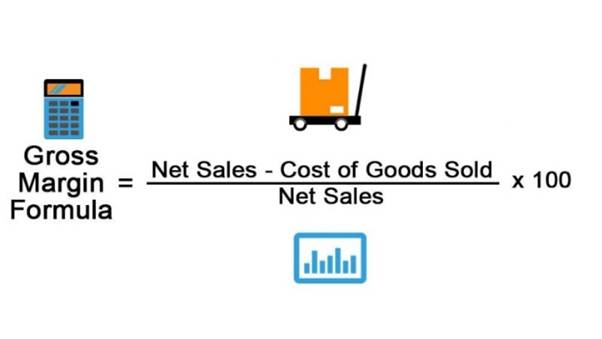
Gross profit margin refers to the percentage of revenue that remains after deducting direct costs. It is a key indicator used to evaluate how profitable a company’s products or services are. The calculation formula is:
(Gross Revenue − Cost of Goods Sold) / Gross Revenue × 100%
Cost of goods sold typically includes direct input costs such as raw materials, direct labor, and manufacturing overhead.
2. Difference from Other Profit Margins
● Operating profit margin: This deducts indirect costs such as selling, administrative, and R&D expenses from gross profit, making it lower than gross profit margin and more reflective of overall operational performance.
● Net profit margin: This is derived by further deducting interest and income taxes from operating profit, representing the final percentage of income retained for shareholders.
📌 Gross Profit Margin ≠ Net Profit Margin
In summary, while net profit margin also considers expenses such as operating costs, taxes, and interest, gross profit margin focuses solely on the gap between revenue and direct costs. It is particularly suited for assessing a company’s core business model.
The Importance of Gross Profit Margin
- Profitability Assessment: A higher gross profit margin indicates that each unit of revenue contributes more profit, reflecting stronger cost control and pricing power, which helps withstand market volatility.
- Pricing Strategy Guidance: By comparing with industry averages, businesses can assess whether their pricing is competitive and adjust product mix or promotional strategies accordingly.
- Supply Chain and Inventory Optimization: Gross profit margin reflects procurement and production efficiency, providing a quantitative basis for improving supply chains and inventory turnover.
What Factors Influence Gross Profit Margin?

Differences in gross profit margins across companies may stem from the following key factors:
1. Raw Materials and Manufacturing Costs
● Procurement prices and bargaining power: Fluctuations in bulk material costs significantly impact gross profit margins.
● Manufacturing efficiency and automation level: Automation can effectively reduce labor costs and defect rates.
2. Exchange Rate Fluctuations
Export-oriented companies (such as Taiwanese tech stocks) selling primarily to USD markets may see reduced exchange income when the USD/TWD rate drops, directly impacting gross profit.
3. Price Competition and Market Positioning
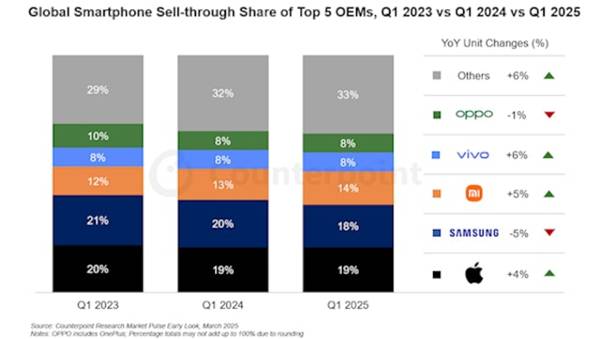
Brands with strong pricing power—such as Apple—tend to have above-average gross profit margins. In contrast, price-sensitive industries like retail typically exhibit lower margins.
Additionally, discounts and promotional campaigns may temporarily boost sales but erode margins—requiring careful balance.
4. Economies of Scale
The larger the scale, the lower the marginal cost. For example, large semiconductor foundries can spread fixed costs more efficiently, increasing their gross profit margin.
How to Improve Gross Profit Margin
1. Optimize Procurement and Production
● Centralize procurement and use long-term contracts to lock in costs.
● Implement automation and lean production to reduce waste and defect rates.
2. Adjust Product Portfolio
● Increase the proportion of high-margin products, and eliminate or upgrade low-margin offerings.
3. Strengthen Branding and Pricing Power
● Build brand equity and leverage differentiated marketing to enhance pricing power.
4. Refined Cost Management
● Regularly review cost structures, break down expense components, and continuously identify cost-reduction opportunities.
How Do Gross Profit Margins Vary by Industry?
Based on global financial data from 2025, gross profit margins vary significantly across industries: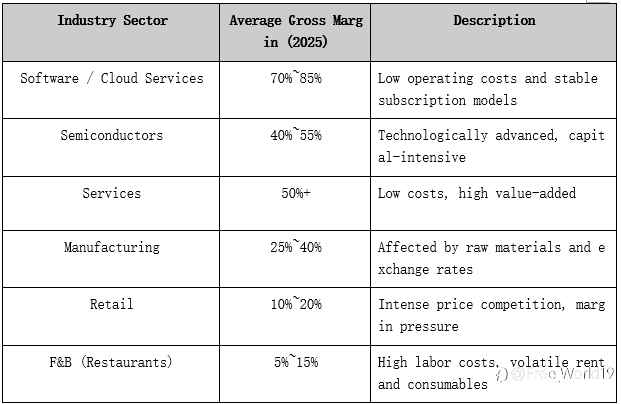
Investors should not blindly pursue "high gross margins," but rather analyze them in context with the industry’s nature, growth potential, and operational strategies.
How to Apply Gross Profit Margin in Investing and Trading
Stock Fundamental Analysis
High gross margin companies often benefit from strong branding, technological barriers, or market dominance. For instance, Apple Inc.’s gross margin surged to a record 46.9% in Q1 2025, driven by its services segment reaching a 75.0% gross margin and a higher proportion of premium iPad and Mac models in its product mix. Investors should assess gross margin alongside indicators such as EPS and ROE for a comprehensive evaluation.
Application in CFD Trading
When trading individual stocks or index CFDs, monitoring a company’s gross profit margin trend can serve as a foundation for fundamental trading strategies. Consistent improvement in gross margin often indicates stable market demand or successful cost optimization, which may drive the stock price higher.
Using a professional platform like Ultima Markets allows you to access financial report analysis and apply tools such as Trading Central to support entry decisions.
Exchange Rates and Gross Margin: A Key Link for Forex Traders
For export-reliant companies, gross profit margins are highly sensitive to exchange rate fluctuations. Take Taiwan as an example:
● When the US dollar strengthens (USD/TWD rises), exporters gain more from currency conversion, improving their gross margins.
● When the New Taiwan dollar appreciates, export prices face pressure, leading to margin compression.
This allows forex traders to analyze margin trends in specific sectors or companies to anticipate corresponding currency movements, enabling cross-asset strategies (e.g., long USD + long tech exporter stock CFDs).
Why Choose Ultima Markets as Your Trading Platform?
As an all-in-one financial trading platform, Ultima Markets offers global stock CFDs, indices, commodities, and over 50 forex pairs, supported by a comprehensive suite of financial tools, including:
● Trading Central Smart Earnings Analysis: Quickly identify trends in gross margin changes
● MT4/MT5 multi-platform access: Real-time order execution with both technical and fundamental integration
● Demo account: Practice fundamental-driven strategies without a deposit
● Leverage up to 1:2000 for flexible capital allocation
● Daily market insights and economic calendar: Stay informed on earnings release schedules and their impact
Additionally, the UM platform uses segregated account structures and up to $1 million in extra insurance coverage to ensure fund safety and worry-free trading.
Start Practicing with a Demo Account
Common Pitfalls and Key Considerations
● Overreliance on Gross Margin: It only reflects the gap between direct costs and selling prices. Combine with operating and net profit margins for a full picture.
● Cross-industry comparisons: Cost structures and business models vary widely; compare within the same industry and company size.
● Ignoring seasonality and inventory swings: Seasonal demand and inventory write-downs can distort margins temporarily. Understand accounting treatment and cyclical effects.
Conclusion
Whether you're a value investor or a short-term trader, gross profit margin is an essential analytical tool. It reveals a company’s competitive strength and provides a foundation for trading decisions.
Join Ultima Markets now, open a demo or trading account, and turn "gross margin" into a practical edge through professional tools and platforms!
면책 조항: 본 게시글에 표현된 견해는 전적으로 작성자의 견해이며 Followme의 공식 입장을 대변하지 않습니다. Followme는 제공된 정보의 정확성, 완전성 또는 신뢰성에 대해 책임을 지지 않으며, 서면으로 명시적으로 언급되지 않는 한 해당 내용을 기반으로 취해진 어떠한 조치에 대해서도 책임을 지지 않습니다.

