


After an exciting week with policy meetings of major central banks in the US, Europe and Japan, the new trading week will be somewhat quieter.
Investors' attention will be focused on a number of notable events including the Bank of England's (BOE) interest rate decision and the US Federal Reserve Chairman's congressional hearing. Fed) Jerome Powell.
Federal Reserve Chairman's hearing
On Wednesday and Thursday, Fed Chairman Jerome Powell will testify before Congress to talk about the monetary policy situation. The hearing took place just a week after the Federal Open Market Committee (FOMC) - the Fed's policymaking body made the decision to pause raising interest rates, after 10 consecutive increases.
Although inflation has slowed markedly from last summer's highs, the Fed's latest dot plot shows that officials could raise rates two more times this year, to 5.6. % if inflation continues to rise.
Chairman Powell's statements at the hearing will be closely watched by investors to find more information related to the Fed's interest rate roadmap in the near future. According to CME Group's FEDWatch tool, the probability of the Fed raising interest rates by 0.25 percentage points in July is now 74%.
Decision of interest rate BOE
The Bank of England (BOE) will meet on Thursday and is expected to continue raising interest rates by 0.25 percentage points to boost efforts to combat inflation. Newly released figures show that wages for British workers have increased faster than expected, increasing inflationary pressure on the UK economy.
This will be the BOE's 13th rate hike in a row, amid unexpectedly persistent UK inflation. Figures released on Tuesday are expected to show that inflation cooled slightly in May, or may even stay at the level in April.
Speaking before a British parliamentary committee on June 13, BOE Governor Andrew Bailey emphasized that it would "take longer than expected" for inflation to fall. Investors expect the BOE to raise interest rates by as much as 6% this year - a high not seen in the UK since 2000.
Inflation data in Japan
Inflation data in Japan will also receive a lot of attention after the BOJ decided to keep the ultra-easy monetary policy unchanged at its meeting last week, and at the same time, stated that inflation in Japan will lower. heat in the second half of this year.
Data released on Friday is expected to show that the inflation rate in Japan in May increased only 3.2% year-on-year, lower than the 3.5% rate in April.
The continued cooling of inflation will support the BOJ's decision to maintain interest rates at extremely low levels to promote economic growth. Japan's economy is recovering slowly from the pandemic and grew 2.7% year-on-year in the first quarter, with solid business and household spending softening the impact from weak exports.
European economic data
The euro area will continue to record data showing that the regional economy is still facing many pressures, after falling into a technical recession in the first quarter of this year, mainly. mainly due to the decline of Germany - the largest economy in the bloc.
The HCOB Preliminary Survey of Manufacturing Purchasing Managers' Index (PMI) is expected to fall from 44.8 in May to 44.5 in June, further indicating a contraction in activity. German and French manufacturing PMIs are also forecast to stay below 50 this month.
The Eurozone Services PMI for June is forecast to come in at 54.5 – still showing an expansion of activity, but down significantly from 55.1 in May. France and Germany also recorded a slight deceleration, showing that the growth momentum of the service industry is also gradually slowing down.
Comments on metal prices – currencies for June 19
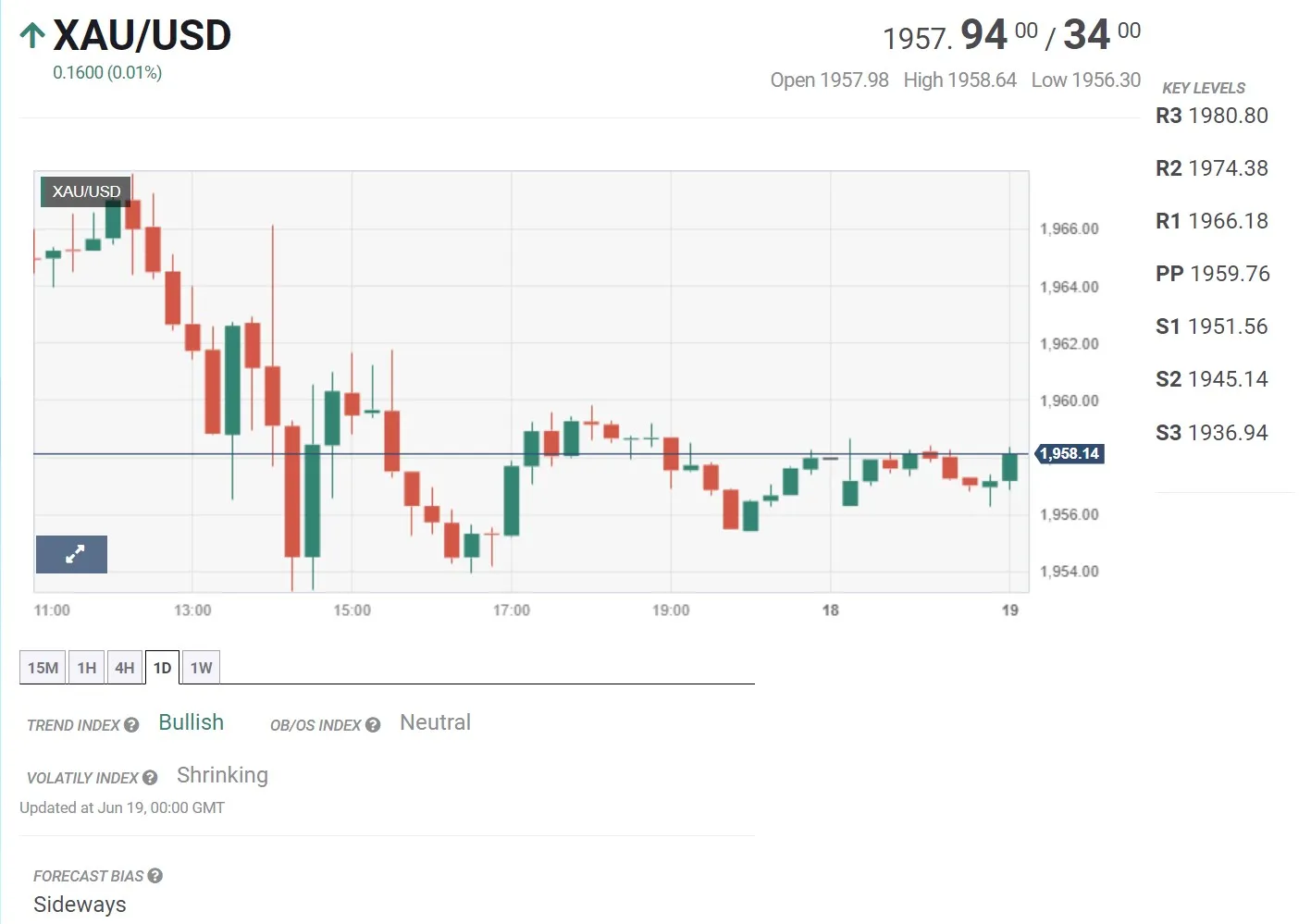
Gold: Gold price is trending up in the short term. If gold can sustain above 1,959.76, investors can go "long" with the expectation of taking profits at 1,966.18 and 1,974.38. Conversely, if gold falls below 1,959.76, investors should "short" with the expectation of taking profits at 1,951.56 and 1,945.14.
Support area S1: 1.951.56
Resistance zone R1: 1,966.18
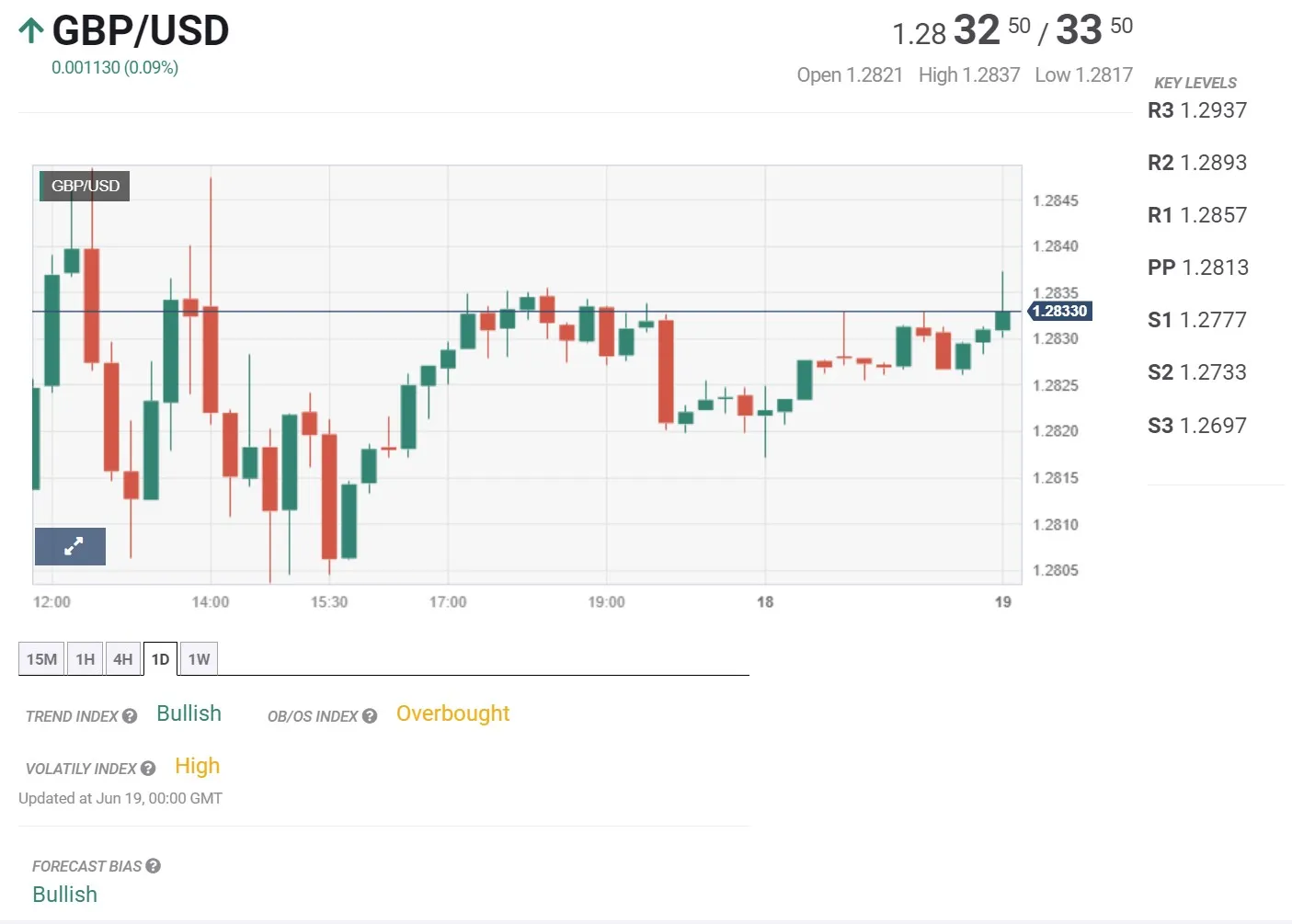
GBP/USD pair: The GBP/USD pair is trending up in the short term. If the exchange rate sustains above 1.2813, investors can go "long" and take profits around 1.2857 and 1.2893. Conversely, if the rate falls below 1.2813, investors should "short" with the expectation of taking profits at 1.2777 and 1.2733.
Support area S1: 1.2777
Resistance area R1: 1.2857
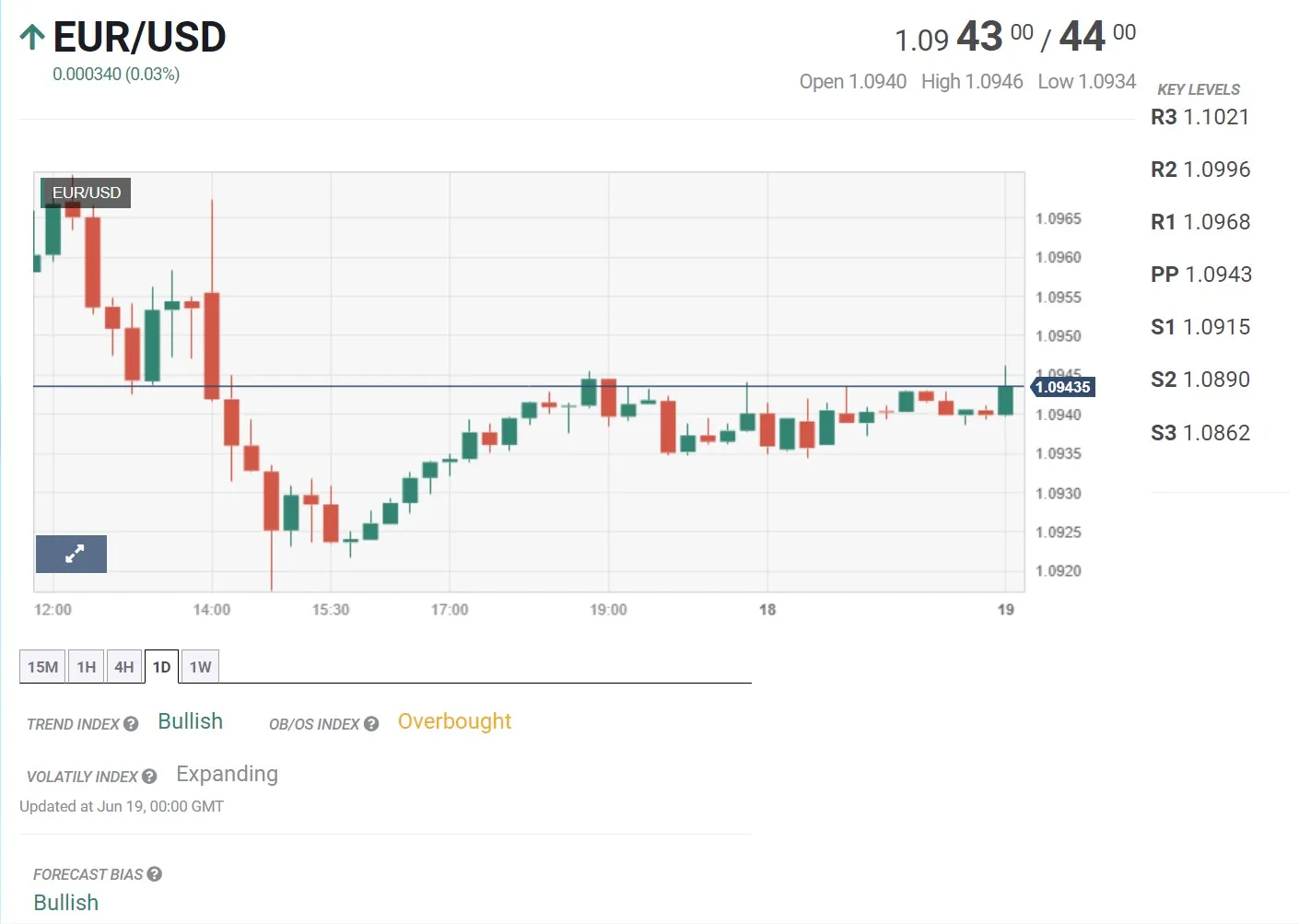
EUR/USD pair: The EUR/USD pair is trending up in the short term. If the exchange rate sustains above 1.0943, investors can go "long" and take profits around 1.0968 and 1.0996. If the rate falls below 1.0943 investors should "short" with the expectation of taking profits at 1.0915 and 1.0890.
S1 Support Zone: 1.0915
Resistance area R1: 1.0968
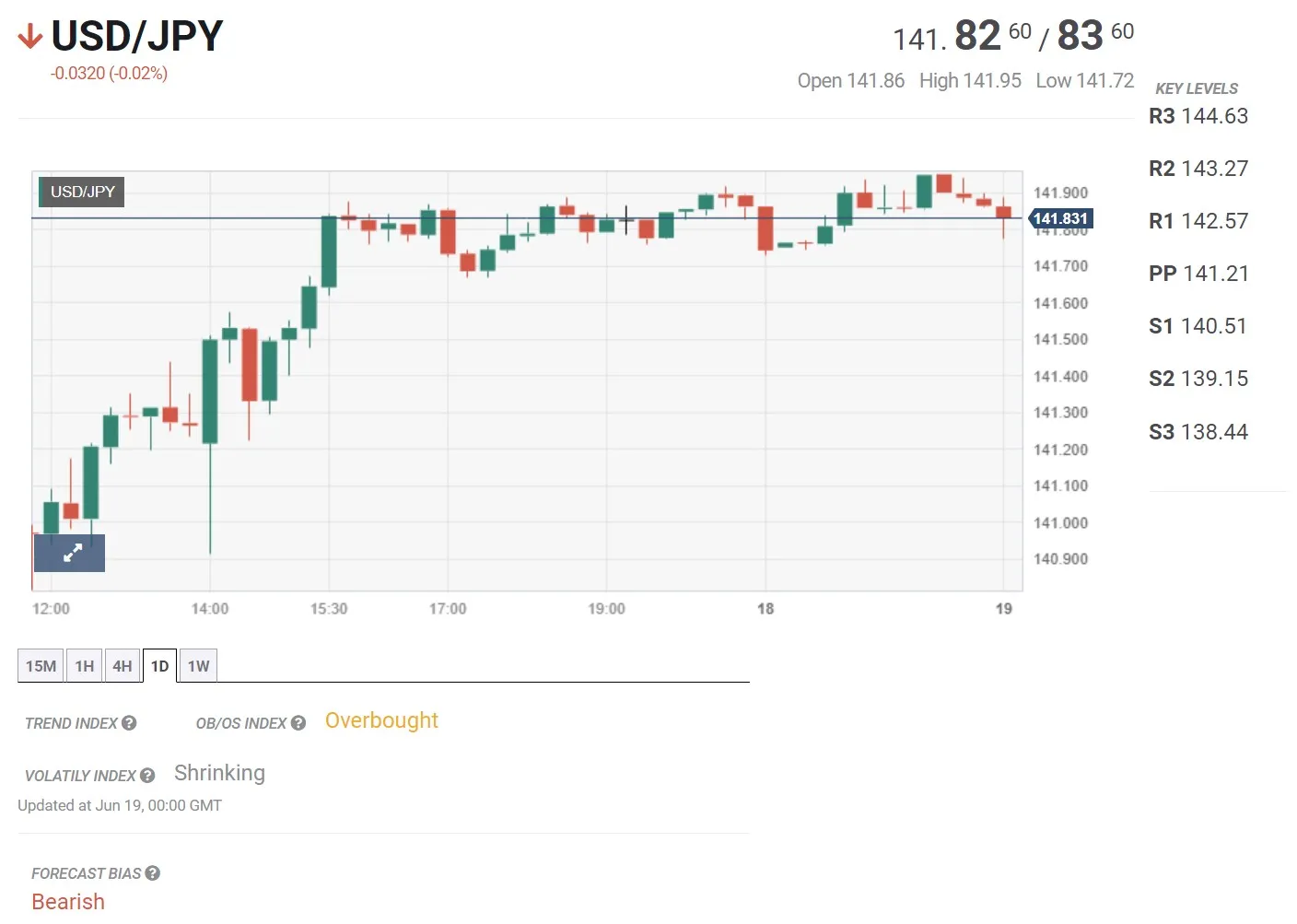
USD/JPY: The USD/JPY pair is forecasted to have a short-term downtrend. If the exchange rate sustains above 141.21, investors should go "long" with the expectation of taking profits at 142.57 and 143.27. Conversely, if the rate is below 141.21, investors can "short" and take profits around 140.51 and 139.15.
Support zone S1: 140.51
Resistance area R1: 142.57
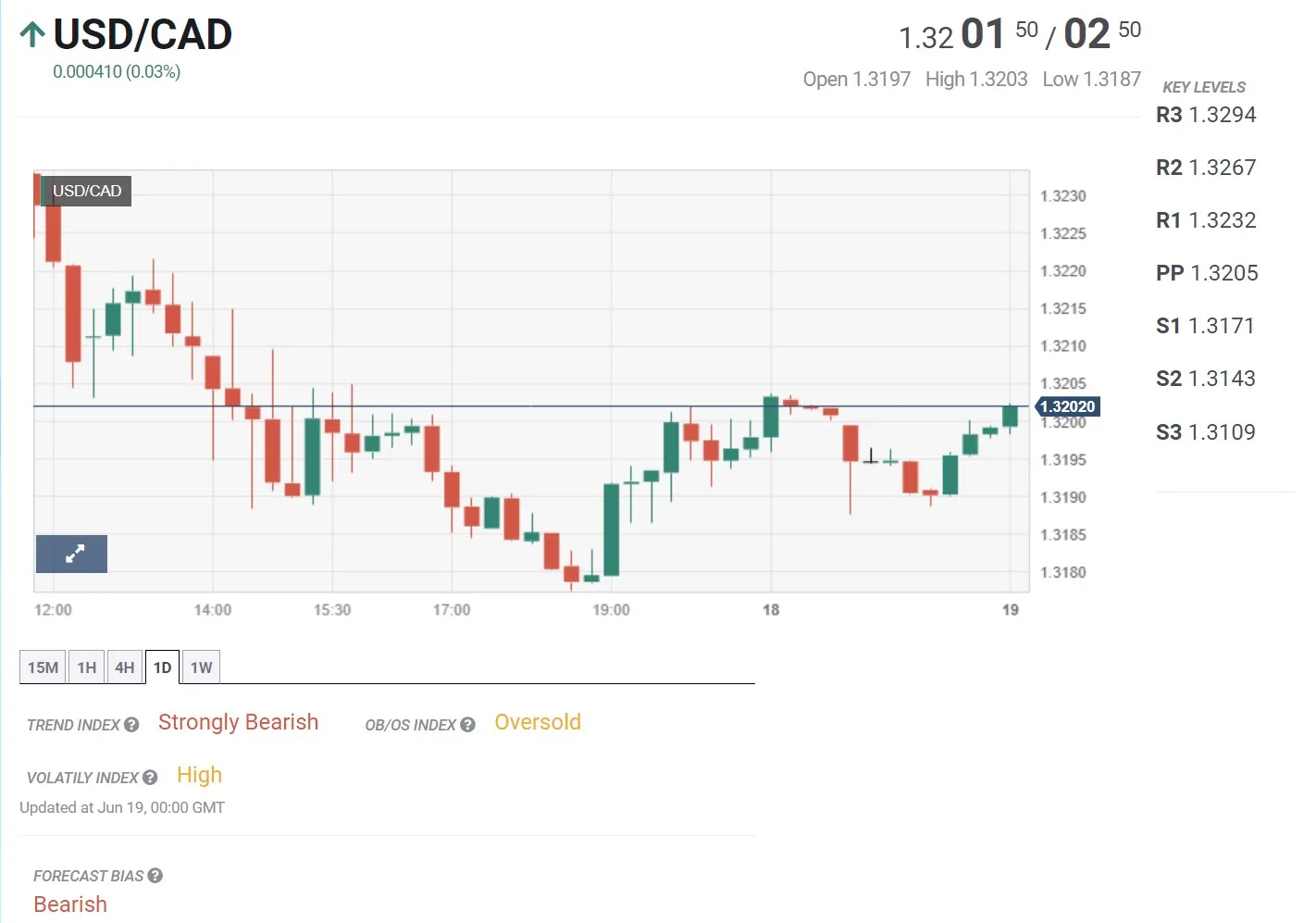
USD/CAD: The USD/CAD pair is rising slightly but is forecast to have a strong short-term downtrend. If the exchange rate sustains above 1.3205, investors can go long and take profits around 1.3232 and 1.3267. If the rate falls below 1.3205, traders should go "short" with the expectation of taking profits at 1.3171 and 1.3143.
Support zone S1: 1.3171
Resistance area R1: 1.3232
Terms
Long: Buy order
Short: Sell order
편집됨
면책 조항: 본 게시글에 표현된 견해는 전적으로 작성자의 견해이며 Followme의 공식 입장을 대변하지 않습니다. Followme는 제공된 정보의 정확성, 완전성 또는 신뢰성에 대해 책임을 지지 않으며, 서면으로 명시적으로 언급되지 않는 한 해당 내용을 기반으로 취해진 어떠한 조치에 대해서도 책임을 지지 않습니다.

더 오래된 의견은 없습니다. 소파를 가장 먼저 잡으십시오.