

While we briefly covered Japanese candlestick charting analysis in the previous forex lesson, we’ll now dig in a little and discuss them more in detail. Let’s do a quick review first.
Japanese Candlestick Trading
Back in the day when Godzilla was still a cute little lizard, the Japanese created their own old school version of technical analysis to trade rice. That’s right, rice.
Traders be hustin’ back then also. To rock ice, you traded rice. 💎
A Westerner by the name of Steve Nison “discovered” this secret technique called “Japanese candlesticks,” learning it from a fellow Japanese broker.
Steve researched, studied, lived, breathed, ate candlesticks, and began to write about it.
Slowly, this secret technique grew in popularity in the ’90s.To make a long story short, without Steve Nison, candlestick charts might have remained a buried secret.
Steve Nison is Mr. Candlestick.
What are Japanese candlesticks?
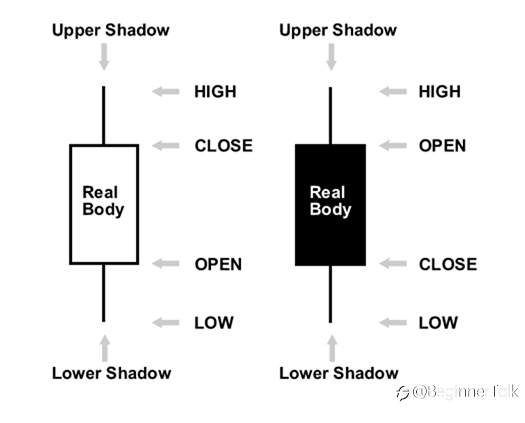
The best way to explain is by using a picture:
Japanese candlesticks can be used for any time frame, whether it be one day, one hour, 30-minutes ….whatever you want!They are used to describe the price action during the given time frame.
Japanese candlesticks are formed using the open, high, low, and close of the chosen time period.
- If the close is above the open, then a hollow candlestick (usually displayed as white) is drawn.
- If the close is below the open, then a filled candlestick (usually displayed as black) is drawn.
- The hollow or filled section of the candlestick is called the “real body” or body.
- The thin lines poking above and below the body display the high/low range and are called shadows.
- The top of the upper shadow is the “high“.
- The bottom of the lower shadow is the “low“.
Reprinted from Babypips,the copyright all reserved by the original author.
편집됨
면책 조항: 본 게시글에 표현된 견해는 전적으로 작성자의 견해이며 Followme의 공식 입장을 대변하지 않습니다. Followme는 제공된 정보의 정확성, 완전성 또는 신뢰성에 대해 책임을 지지 않으며, 서면으로 명시적으로 언급되지 않는 한 해당 내용을 기반으로 취해진 어떠한 조치에 대해서도 책임을 지지 않습니다.

더 오래된 의견은 없습니다. 소파를 가장 먼저 잡으십시오.