

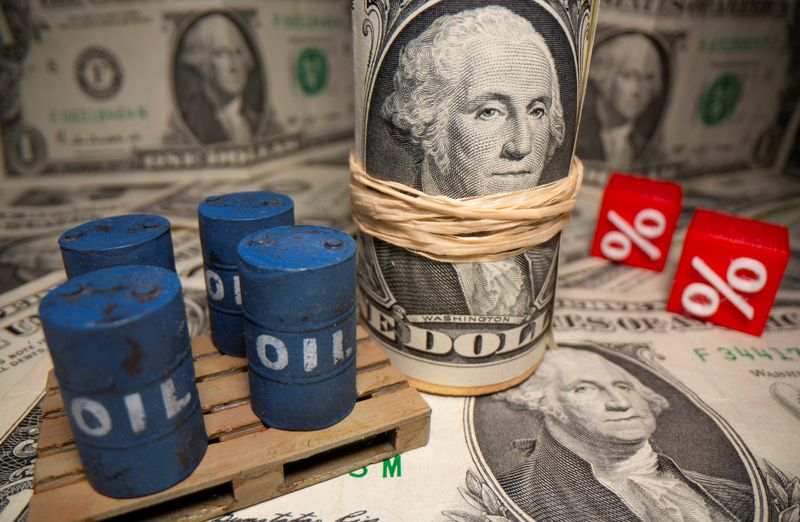
 © Reuters. 3D printed oil barrels and percentage symbols are seen in front of dollar banknotes in this illustration
By Sonali Paul
MELBOURNE (Reuters) - Oil prices fell in early trade on Tuesday on concerns about fuel demand growth as a fresh wave of COVID-19 infections around the world sparks tighter lockdowns just as major producers ramp up output.
U.S. West Texas Intermediate (WTI) crude futures fell 22 cents, or 0.5% to $40.79 a barrel at 0132 GMT, while Brent crude futures fell 27 cents, or 0.6% to $43.88 a barrel.
The slide comes after WTI rose 1.8% and Brent climbed 1.5% on Monday on better-than-expected data on manufacturing activity in Asia, Europe and the United States showing factories were emerging from the worst of the early coronavirus pandemic impact.
"On the demand side, we had quite encouraging global manufacturing (data) ... but there's still quite a bit of evidence of the oil demand recovery stalling in quite a few markets with a resurgence of COVID-19," said Lachlan Shaw, head of commodity research at National Australia Bank (OTC:NABZY) (NAB).
Denting fuel demand, cities from Manila to Melbourne are tightening lockdowns to battle new infections, while Norway has stopped cruise ship traffic in the latest European travel alarm.
In a further sign of a patchy rebound in demand, analysts estimate U.S. refined product stockpiles rose last week, according to a preliminary Reuters poll ahead of data due from the American Petroleum Institute industry group later on Tuesday and the U.S. government on Wednesday.
Five analysts estimated, on average, that U.S. inventories of gasoline rose by 600,000 barrels. Distillate stockpiles, which include diesel and heating oil, likely grew by 800,000 barrels, while crude stocks fell by 3.3 million barrels in the week to July 31.
At the same time producers in the Organization of the Petroleum Exporting Countries (OPEC) and its allies, together known as OPEC+, are stepping up output this month, adding around 1.5 million barrels a day of supply. U.S. producers also plan to restart shut-in production and inventories remain near historical highs.
"So it's tough to see, in my view, conviction emerging to the upside," NAB's Shaw said. "There could be heightened risk of prices moving to the downside in the very near term."
Reprinted from investing.com, the copyright all reserved by the original author.
면책 조항: 본 게시글에 표현된 견해는 전적으로 작성자의 견해이며 Followme의 공식 입장을 대변하지 않습니다. Followme는 제공된 정보의 정확성, 완전성 또는 신뢰성에 대해 책임을 지지 않으며, 서면으로 명시적으로 언급되지 않는 한 해당 내용을 기반으로 취해진 어떠한 조치에 대해서도 책임을 지지 않습니다.

더 오래된 의견은 없습니다. 소파를 가장 먼저 잡으십시오.