


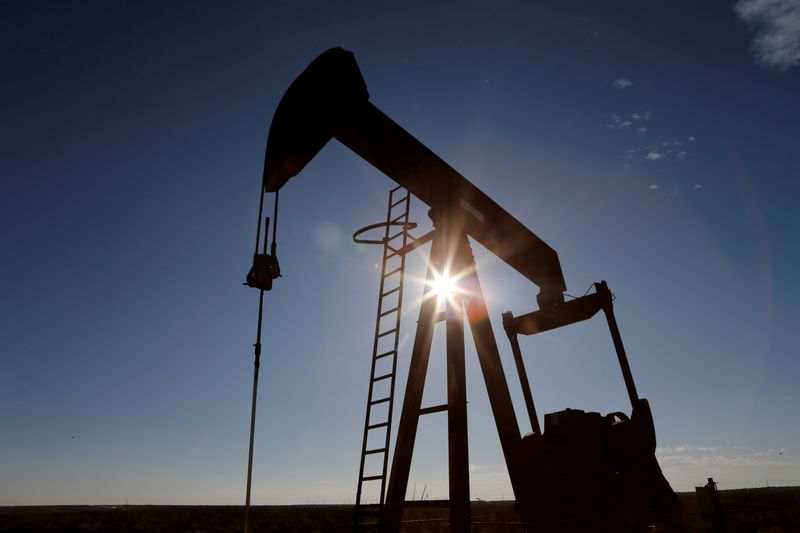
 © Reuters. FILE PHOTO: The sun is seen behind a crude oil pump jack in the Permian Basin in Loving County
By Yuka Obayashi
TOKYO (Reuters) - Oil prices fell on Monday on oversupply concerns as OPEC and its allies wind back production cuts in August and a rise in worldwide COVID-19 cases points to a slower pick-up in fuel demand.
Brent crude futures slid 26 cents, or 0.6%, to $43.26 a barrel by 0253 GMT. U.S. West Texas Intermediate (WTI) crude futures were down 29 cents, or 0.7%, at $39.98 a barrel.
Brent posted a fourth month of gains in July and U.S. crude posted a third as both rose from depths hit in April, when much of the world was in lockdown due to the coronavirus pandemic.
"Investors are worried about oversupply as the OPEC+ is due to start reducing production cuts this month and a recovery in oil prices from record lows is likely to encourage U.S. shale producers to ramp up output," said Hiroyuki Kikukawa, general manager of research at Nissan (OTC:NSANY) Securities.
"Also, fears over a resurgence in the coronavirus cases are weighing on oil markets," he said.
Oil output by the Organization of the Petroleum Exporting Countries rose by over 1 million barrels a day in July as Saudi Arabia and other Gulf members ended their voluntary extra supply curbs on top of an OPEC-led deal.
Russia's oil output in July was unchanged from June levels, the nation's Energy Ministry said on Sunday.
OPEC+, a grouping of OPEC and allies including Russia, is set to step up output in August, adding about 1.5 million bpd to global supply.
U.S. energy firms kept the number of oil and natural gas rigs unchanged at a record low as the rig count fell for a fifth straight month, although July marked the smallest monthly decline.
Oil prices are set for a slow crawl upwards this year as the gradual easing of coronavirus-led restrictions buoys demand, although a second COVID-19 wave could slow the pace of recovery, a Reuters poll showed on Friday.
The Australian state of Victoria declared a state of disaster and authorities in the Philippines said they would impose fresh restrictions in Manila this week, reflecting worries around the world about getting the pandemic under control.
"Adding to matters is that the U.S. consumer market is entering the last few weeks of peak driving season and with mobility tracking data flatlining," Stephen Innes, chief global market strategist at AxiCorp, said in a report.
"Unless there is a significant drop in the COVID-19 case count curve that is sufficient enough to reduce consumer fear of the virus and shift mobility data higher, demand might not get much better from here on in," he said.
Reprinted from investing.com, the copyright all reserved by the original author.
면책 조항: 본 게시글에 표현된 견해는 전적으로 작성자의 견해이며 Followme의 공식 입장을 대변하지 않습니다. Followme는 제공된 정보의 정확성, 완전성 또는 신뢰성에 대해 책임을 지지 않으며, 서면으로 명시적으로 언급되지 않는 한 해당 내용을 기반으로 취해진 어떠한 조치에 대해서도 책임을 지지 않습니다.

더 오래된 의견은 없습니다. 소파를 가장 먼저 잡으십시오.