

Mining cryptocurrency seems like a no-brainer. Set up a computer to help solve complex math puzzles and you are rewarded with a coin or a fraction of a coin. The first bitcoin miners were able to earn coins relatively quickly just using what computing power they had in their homes.
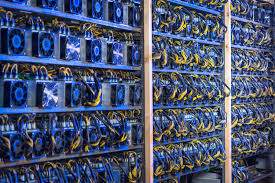
By 2019, cryptocurrency mining has become a little more complicated and involved. With bitcoin, the reward is halved every four years. On top of that, serious miners have built huge arrays to mine, making it harder for smaller miners to compete. You can join a bitcoin mining pool to be more effective, but that comes with a fee, reducing your profits.
No matter what you decide to mine, you have to account for your setup costs, including, in some cases, graphics cards that can cost upward of $700 apiece. It’s possible to put together a basic rig for some of the less popular cryptocurrencies for around $3,000. However, some miners spend more than $10,000 on their rigs.
On top of building your rig, you also need to realize that you are going to be using quite a lot of power. If you have high power rates, you could end up spending quite a lot to mine coins—especially bitcoin. The electricity cost involved in mining a single bitcoin is more than $3,000 in the cheapest states.8 For states with higher electric rates, you could spend more than $6,000 in electricity to mine a single bitcoin. With the cost of one coin hovering at $7,000 as of December 2019, the energy costs alone don't make it worth it.
A less powerful rig mining alternative currencies could save you money. Even so, it can take several weeks, or even months, to recoup your original investment and become profitable.
Cloud Mining
Cloud mining involves purchasing time on someone else’s rig. Companies like Genesis Mining and HashFlare charge you based on what’s called a hash rate—basically, your processing power. If you purchase a higher hash rate, you are expected to receive more coins for what you pay for, but it will cost more.
Depending on the company you choose, you might pay a monthly fee, or you might pay according to the hash rate.Some companies also charge a maintenance fee. In general, cloud miners that allow you access to bitcoin come at higher rates.
In some cases, you might be required to sign a year-long contract, locking you in. If the value of the cryptocurrency drops, you could be stuck in an unprofitable contract.
However, at least with cloud mining, you don’t have to worry about power consumption costs and other direct costs related to doing all of the mining with your own rig.
The Long View
Investing in expensive equipment and spending in excess of $3,000 in energy bills to mine one bitcoin only makes sense if you believe the price of bitcoin will rise beyond the $3,000 to $4,000 range.
Buying bitcoins with hope of their value rising is equally risky. The market for cryptocurrencies is young, and for every analyst who sees great potential, there is another who expects the market to go bust.
Banks such as JP Morgan still view cryptocurrencies as unproven and likely to drop in value. Benoit Coeure, a board member with the European Central Bank, argued in January 2018 that cryptocurrencies could prove to be a good system for cross-border payments as long as there is an understanding of how to "control these gateways between the shadow-currency universe and the regular financial system."Less than a year later, he referred to bitcoin specifically as the "evil spawn of the financial crisis," while still acknowledging the broader potential of cryptocurrencies.
Reprinted from The Balance, the copyright all reserved by the original author
면책 조항: 본 게시글에 표현된 견해는 전적으로 작성자의 견해이며 Followme의 공식 입장을 대변하지 않습니다. Followme는 제공된 정보의 정확성, 완전성 또는 신뢰성에 대해 책임을 지지 않으며, 서면으로 명시적으로 언급되지 않는 한 해당 내용을 기반으로 취해진 어떠한 조치에 대해서도 책임을 지지 않습니다.

더 오래된 의견은 없습니다. 소파를 가장 먼저 잡으십시오.