

EURO, EUR/USD, EU AID PACKAGE– TALKING POINTS
- Politically-sensitive Euro may face heightened liquidation pressure amid intra-regional tension
- Deliberations over EUR750 billion EU aid package could rattle fragile sovereign debt markets
- EUR/USD price action could turn more bearish as pair stalls just below multi-month resistance
EURO MAY BLINK ON POLITICAL TENSION
Since late-May, the Euro has risen a little over 4.50 percent against the US Dollar counterpart, in large part due to two factors. The first has been the market-wide selloff in the Greenback, and the other has been cautiously hopeful signs of political unity in Europe. Euro strength was also buttressed by the ECB’s unexpected addition of EUR600b to its Pandemic Emergency Purchase Program (PEPP).
Recently, the European Commission proposed a 750 billion Euro stimulus plan, 500b of which would be given in the forms of grants to economies and sectors hit hardest by the coronavirus pandemic. The remaining 250b Euros would be distributed in the forms of loans. The news helped to bring sovereign bond yields on structurally-distressed states – like Italy and many in the Mediterranean – down and pushed the Euro higher.
Italian 10-Year Bond Yields, EUR/CHF, EUR/USD – 4-Hour Chart
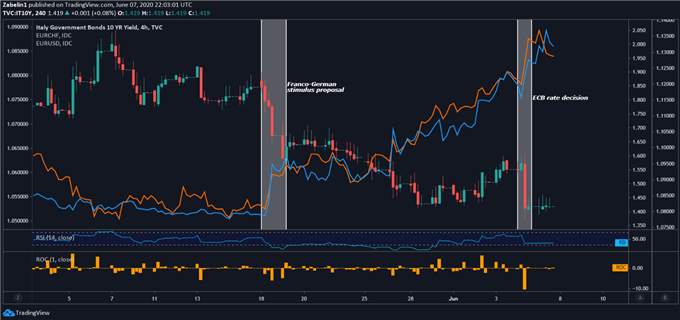
EUR/USD chart created using TradingVuew
While the prospect of unity and quelled fears of a sovereign debt crisis helped restore risk appetite in Europe, prolonged deliberations and delayed implementation could reverse these positive developments. Later today, Eurozone finance ministers will be meeting to discuss the recovery package and to debate key questions about distribution and oversight.
Fiscally-conservative European lawmakers in Austria, the Netherlands, Denmark and Sweden expressed a preference in changing the constitution of the aid from grants to loans. Southern member states have been leaning more towards grants and debt-mutualizing measures like the so-called coronabonds. The latter caused the political rift between North and South to widen amid the pandemic.
The other issue is oversight. Member states bordering the Mediterranean have a strong reluctance to accept loans that are monitored by institutions outside their borders. The Greek debt crisis eight years put a sour taste in many Southern lawmakers’ mouths, and has been part of the reason why that area in Europe has been known to foster more Euroscepticism than its Northern counterparts.
The issue about oversight may therefore become a sticking point and possibly lead to delayed implementation. The Commission has suggested that member states create a recovery plan that requires each recipient to outline their intended reforms and investment priories until 2024. The upcoming meeting may provide insight as to how next week’s conference among EU leaders will go, which could either pressure or push the Euro higher.
EURO ANALYSIS: EUR/USD
EUR/USD has had a remarkable ascent ever since it broke out of the 1.0783-0.1981 congestive range, though its rise may be showing signs of exhaustion. The pair’s ascent in large part owes its thanks to an aggressive selloff in the US Dollar. A short-term pullback could see the pair retreat to a familiar stalling point at 1.1287, and if that fails to keep EUR/USD afloat it could open the door to retesting the floor at 1.1147.
EUR/USD – Daily Chart
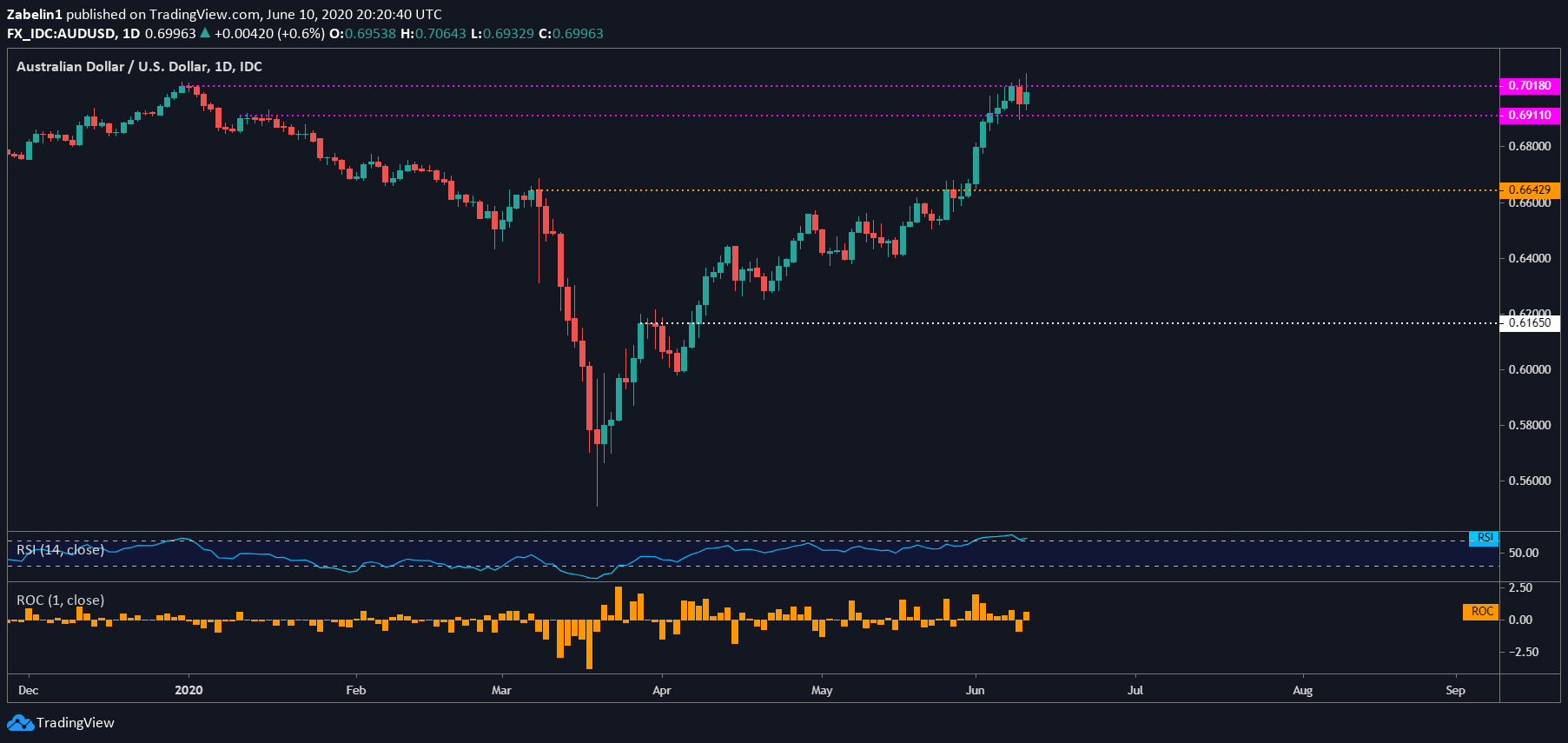
EUR/USD chart created using TradingView
Reprinted from DailyFX,the copyright all reserved by the original author.
면책 조항: 본 게시글에 표현된 견해는 전적으로 작성자의 견해이며 Followme의 공식 입장을 대변하지 않습니다. Followme는 제공된 정보의 정확성, 완전성 또는 신뢰성에 대해 책임을 지지 않으며, 서면으로 명시적으로 언급되지 않는 한 해당 내용을 기반으로 취해진 어떠한 조치에 대해서도 책임을 지지 않습니다.

더 오래된 의견은 없습니다. 소파를 가장 먼저 잡으십시오.