

To investors, it makes sense. Stocks have surged 40% since late March because the worst damage from the coronavirus recession is in the past and the cavalry has arrived. The Federal Reserve is now propping up risky assets, Congress is flooding the economy with money and there are wee signs of an economic recovery.
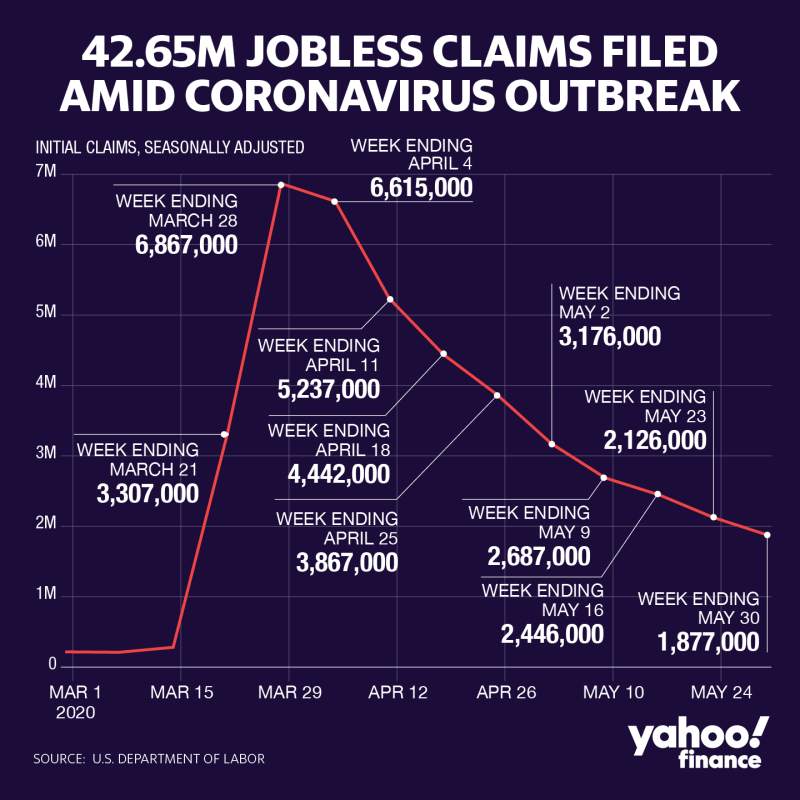
If you’re an ordinary person who thinks the soaring stock market is crazy, you’re right. There’s no right or wrong value for any stock, or for the market as a whole. There’s only the value the market assigns at any point in time, based on supply, demand and other factors. But demand for stocks—investors placing buy orders—is wildly out of sync with what’s happening in the real economy, where 42 million Americans are newly unemployed and millions of businesses are reeling.
Traders are right when they say the stock market evaluates the future, not the past. Backward-looking economic data about what happened last week or last month is irrelevant to the value of stocks unless it hints at future actions, such as an unexpected change in Federal Reserve policy. But it’s hard to imagine what future stocks are evaluating right now. 2025? 2030? If so, that’s a time horizon so distant it’s almost meaningless.
Here are some of the grim developments economists foresee during the next 12 to 24 months:
Massive small business failures. “Very small businesses with just a few employees are expected to fail en masse,” Moody’s Analytics says in a June 2 forecast. “Of the 8 million business establishments operating prior to the crisis in the U.S., it would not be surprising if close to a million do not make it. New businesses will eventually form, and the economy will recover, but that process will take years, not months.” Many of those small firms don’t have the connection with banks needed to take advantage of federal aid. Commercial bankruptcy filings in May soared by 48% year over year, a preview of the carnage coming.
Trillions in lost output. The Congressional Budget Office estimates the coronavirus recession will cost the U.S. economy $15.7 trillion in real economic output by 2030, adjusted for inflation, for a 5.3% drop in total output. That’s 7 months’ worth of economic activity that simply won’t happen, which will suppress employment and incomes well into the decade.
A long and slow jobs recovery. IHS Markit thinks employment won’t recover to pre-virus levels until 2024. That’s four years from now. Congress is already hesitant to pass a fourth stimulus bill, because of the massive run-up in federal debt stimulus measures have already caused. Will it be willing to add even more debt a year from now? Two years from now?
Debt crises. Governments everywhere are racking up debt to bail out companies and workers and keep the global recession from getting worse. At some point, serious doubts will rise about some countries’ ability to make interest payments. It’ll happen first in developing countries and then perhaps in Italy. Rising interest rates would be one ugly manifestation, pushing up borrowing costs for everybody.
Bank stress. Many businesses that fail or restructure will default on debt owed to banks and other lenders. Banks aren’t fragile and overleveraged as they were before the financial crash in 2008, but an unforeseen shock of the magnitude we’re seeing now could bring down at least a few lenders.
Investors clearly think the Fed and other central banks can corral these problems, and the Fed certainly has the power to massively intervene in the economy. What the Fed can’t do, however, is create demand. That requires businesses and consumers to gain confidence that the coronavirus is gone for good, jobs are safe and it’s okay to spend money.
Reprint from Yahoo Finance. The copyright all reserved by original author.
면책 조항: 본 게시글에 표현된 견해는 전적으로 작성자의 견해이며 Followme의 공식 입장을 대변하지 않습니다. Followme는 제공된 정보의 정확성, 완전성 또는 신뢰성에 대해 책임을 지지 않으며, 서면으로 명시적으로 언급되지 않는 한 해당 내용을 기반으로 취해진 어떠한 조치에 대해서도 책임을 지지 않습니다.

더 오래된 의견은 없습니다. 소파를 가장 먼저 잡으십시오.