

There are four types of people who are not suitable for speculation: those who are stupid, who don't want to think, who don't control their emotions, and who want to make quick money. These people can be further classified into three groups: stupid, lazy and people who cannot control emotions. Needless to say, stupid people and lazy people basically can't do anything. The thing you need to pay attention to here is emotional control.
Humans are emotional animals. But comparing to other jobs or industries, trading seems to be the most likely one to cause emotional ups and downs from greed to fear, or from arrogance to fury.
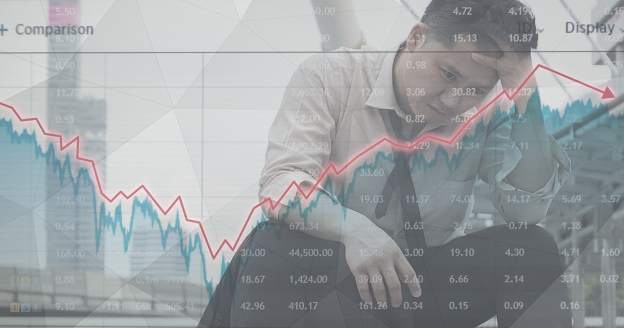
There are several possible reasons:
The first is that trading can easily or very quickly lead to the loss of money (that is, risky);
Second, the market is constantly changing, and your judgment can be wrong at any time (that is, denying your intelligence);
Third, the market shares something in common with (that is, there is luck).
On the last point, some people may think of investing and trading as a kind of entertainment or game - both of intelligence and of luck. But Soros once warned investors: "If investment becomes entertainment, and if you start to have fun from it, then you may not make money. Real investment is tedious."
Trading is in no way gambling. Because luck is negligible if you consider trading in the long run. Although probability (or winning rate) takes up a very big proportion in trading, the risk / reward ratio is also vital to the success of trading. If an order has only a 50% winning rate, or in other words, you have only a 50% certainty in advance, but if the "risk-reward ratio" is very favorable, it is also worth doing. Even on the issue of probability, the market is not random. That's right, since the market is in equilibrium most of the time, the probability of the next rise and fall is almost the same (that is, 50%). But at some point, the probability of direction will tilt, such as 60% -70% of the probability in a certain direction, so we need to choose the appropriate entry point, instead of entering randomly. Finding a favorable probability and a favorable risk-benefit ratio, supplemented by position management, is almost everything you need for successful trading. So trading is definitely not gambling.
Recognizing that point is the foundation of emotional management. Because since it is not gambling and a game of luck, it means that it is a job that is done by reason and logic which can be the price of fluctuation of emotion. In leveraged trading in particular, falling into the trap of emotions can quickly cost you every penny in your account. For example, when the market falls sharply and wipes out your multiple stop loss, you cannot control your emotions and immediately start shorting your account and even double the position. Yet, the market may go again your expectations, and quickly rises shortly after you place your order, once again sweeping your short order stop loss.
면책 조항: 본 게시글에 표현된 견해는 전적으로 작성자의 견해이며 Followme의 공식 입장을 대변하지 않습니다. Followme는 제공된 정보의 정확성, 완전성 또는 신뢰성에 대해 책임을 지지 않으며, 서면으로 명시적으로 언급되지 않는 한 해당 내용을 기반으로 취해진 어떠한 조치에 대해서도 책임을 지지 않습니다.

더 오래된 의견은 없습니다. 소파를 가장 먼저 잡으십시오.